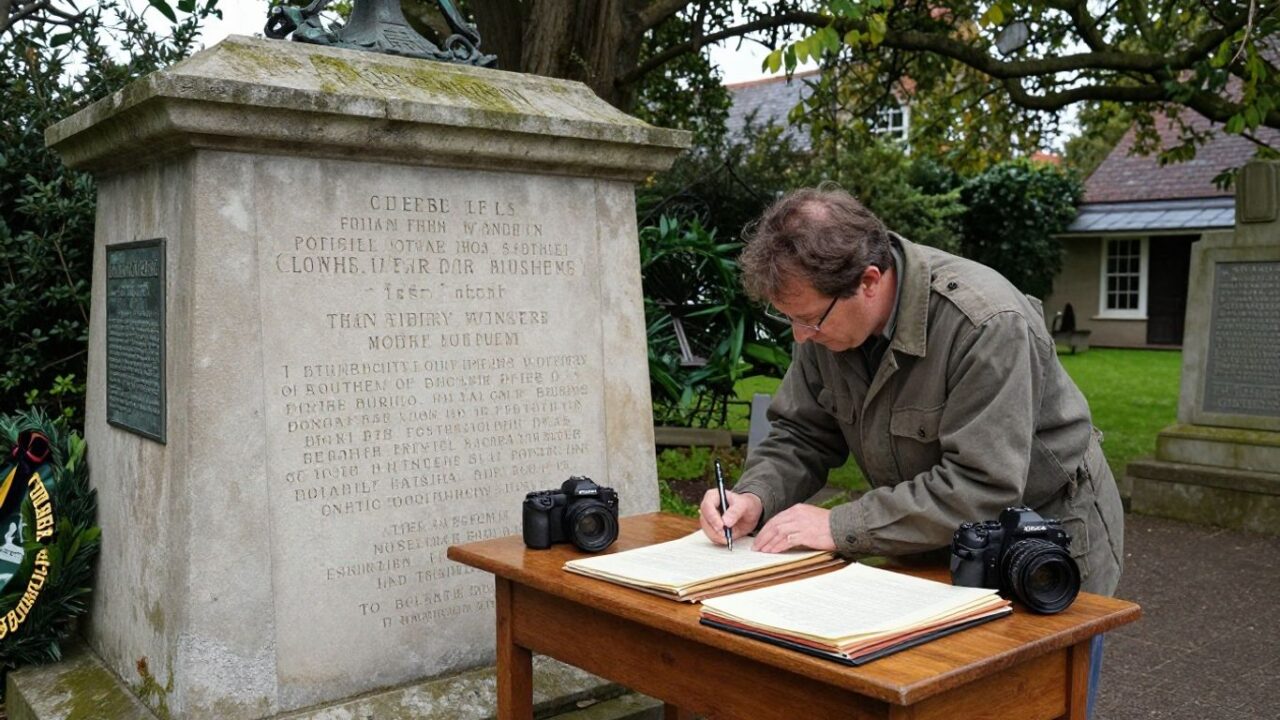
Understand the significance and condition of a memorial
A memorial is more than a structure in a cemetery, museum, town square, or regimental collection. It can hold personal grief, community memory, military service, and evidence of the people and craft traditions that shaped a place. Before we clean or repair it, we need to understand what makes this particular object significant and how much of its original condition remains.
Identify the memorial’s historical, cultural, and personal value
We begin by asking who created the memorial, whom it commemorates, and how it has been used or understood over time. A regimental plaque, a war memorial, and a family headstone may require different decisions because their meanings, associated ceremonies, and communities of care are not the same. Local historical societies, cemetery records, museum catalogues, service archives, and family papers may help us build that context.
We should also record connections that are not obvious from the object itself. A memorial may mark an event, preserve a traditional design, or form part of a wider historic precinct. Meaning guides treatment, because a visually minor feature may be central to the memorial’s identity.
Record materials, craftsmanship, inscriptions, and design details
We should describe what we can see without guessing. Note whether the memorial is made from stone, cast or wrought metal, timber, concrete, ceramic, glass, or a combination of materials, then record construction methods, surface finishes, lettering styles, fixings, colours, dimensions, and decorative details. Hand-cut lettering and tool marks can be as significant as the main inscription.
Transcribe inscriptions carefully, preserving line breaks, punctuation, abbreviations, and unusual spelling. We should distinguish original features from later additions, replacements, repairs, and painted finishes, since those layers may each tell part of the memorial’s story.
Recognize common signs of deterioration
Deterioration often begins quietly. We look for open joints, hairline cracks, bulging surfaces, flaking coatings, rust staining, powdering stone, dislodged fragments, biological growth, water marks, leaning elements, and changes in the legibility of inscriptions. A clean-looking surface can still conceal movement, moisture, or failing attachments.
We should compare observations over time rather than treating one visit as a complete diagnosis. Fresh photographs and notes after wet weather, seasonal changes, or nearby building work can reveal whether a problem is stable or progressing.
Determine when professional assessment is necessary
Professional advice is warranted when a memorial is unstable, structurally cracked, historically rare, unusually fragile, or difficult to identify. We should pause before touching friable surfaces, lifting fragments, removing coatings, treating suspected lead paint, or attempting to reset a heavy component. Public access, overhead hazards, and damaged electrical or lighting elements also call for specialist management.
A conservator or appropriately experienced monument specialist can separate urgent safety concerns from cosmetic change. That distinction helps us avoid an irreversible treatment when careful observation would have been the better first step.
Document the memorial before taking action
Good documentation gives us a baseline and makes later decisions easier to explain. It records not only damage, but also the memorial’s setting, orientation, materials, and relationship to nearby objects. A memorial preservation guide is most useful when it treats documentation as part of conservation rather than as an administrative task.
Create a written condition report
We can start with the date, location, ownership or custodial arrangements, weather, recent events, and the names of everyone present. The report should describe each elevation and component in plain language, separating observed facts from possible causes. We should note areas that were not accessible instead of filling gaps with assumptions.
A consistent format makes repeat inspections more useful. We can record condition as stable, monitor, urgent, or unsafe, provided we explain what those labels mean and use them consistently across future reports.
Photograph inscriptions, damage, and surrounding features
Photographs should be taken before cleaning, moving, or applying any treatment. We capture the whole setting, each face of the memorial, close views of inscriptions and defects, and details of joints, fixings, drainage, vegetation, and nearby structures. A scale reference and a record of the camera date can make later comparisons more reliable.
We should use even light where possible and avoid relying on a single dramatic image. A useful photographic set includes both a readable view of the inscription and wider views that show exactly where each close-up belongs.
Map cracks, biological growth, stains, and missing elements
A simple sketch or annotated elevation can show the location and extent of damage more clearly than prose alone. We mark cracks, open joints, stains, moss, lichen, plant roots, missing fragments, leaning sections, and areas that have already been repaired. The map should use stable reference points, such as corners, lettering lines, or plinth edges.
For a complicated memorial, we can divide the object into numbered zones and use the same zone names in photographs and written notes. This creates a practical chain between observation, proposed work, and later review.
Organize records for future caretakers and preservation teams
Records are most valuable when someone else can understand them without needing us to explain every page. We should keep the condition report, photographs, sketches, measured drawings, treatment history, correspondence, invoices, permissions, and product information together in a labelled digital and physical archive. File names should include the memorial, location, date, and view or component.
A short index prevents important evidence from disappearing into an unlabeled folder. We should also identify who is responsible for updating the archive, where access copies are stored, and which documents contain sensitive personal or ownership information.
A compact record checklist helps us avoid overlooking the basics:
- location, orientation, dimensions, and access conditions
- materials, inscriptions, finishes, attachments, and known history
- photographs with scale references and consistent file names
- mapped defects, previous interventions, and areas not inspected
Once this material is assembled, future caretakers can see what has changed and professionals can prepare more focused recommendations. The documentation also protects the memorial’s history if responsibility passes to another family, institution, or community group.
Choose safe cleaning and maintenance methods
Cleaning should reveal information, not erase it. A memorial’s surface may carry original finishes, tool marks, historic paint, or evidence of earlier care, so a bright appearance is not automatically the right objective. We work from the gentlest suitable method and test it in a small, inconspicuous area before proceeding.
Match cleaning techniques to the memorial’s materials
Stone, metal, timber, concrete, and painted surfaces respond differently to water, detergents, abrasion, and drying. We first identify the material and its condition, then consider whether the surface is sound enough to clean at all. A porous or friable surface may be harmed by a method that would be acceptable on a hard, stable one.
We should also consider the surrounding environment and where dirty water will run. Small trials, thorough rinsing where appropriate, and a pause to assess the result are safer than committing the whole memorial to one untested approach.
Remove dirt, biological growth, and surface stains carefully
Loose dirt can often be removed with soft, clean brushes and controlled water, but even this needs care around weakened lettering and open joints. Biological growth should not simply be scraped away if its roots or attachments are holding fragile material in place. We should identify the growth, reduce the cause of dampness where possible, and allow a qualified person to select any treatment for a sensitive or historic surface.
The aim is controlled removal rather than instant perfection. After cleaning, we inspect the surface again because stains can reveal cracks, failed drainage, or metal corrosion that was previously hidden.
Avoid abrasive tools, harsh chemicals, and pressure washing
Household bleach, strong acids, wire brushes, abrasive pads, and high-pressure water can remove material along with the dirt. They may roughen a surface, drive water into joints, strip historic coatings, or make future soiling worse. We should never mix cleaning chemicals, and we should follow product safety information when a treatment has been approved for use.
Where the memorial is historic, fragile, painted, or associated with a museum or cemetery, an unrecorded experiment is especially risky. A conservative approach protects evidence that cannot be replaced.
Establish a routine inspection and maintenance schedule
A schedule should reflect the memorial’s material, exposure, condition, access, and significance. We can inspect after severe weather and at sensible regular intervals, recording the same views and measurements each time. Routine care may include clearing leaves from drainage paths, checking fixings from a safe position, and reporting new movement rather than attempting an improvised repair.
The schedule should state who checks the memorial, what they are allowed to do, and when they must escalate a concern. That turns maintenance into a shared responsibility instead of an occasional reaction to visible damage.
Address common types of damage
Damage often has more than one cause. Water, temperature changes, corrosion, roots, pollution, poor earlier repairs, and physical impact can interact, so treating only the visible symptom may leave the underlying problem untouched. We should record the pattern first and choose an intervention that is proportionate to the risk.
Manage cracks, chips, breaks, and unstable components
We should not fill, glue, lift, or reset a damaged component before understanding whether it is moving. Marking the end of a crack with a dated note or photograph can help establish change, while a leaning slab, loose fragment, or unstable cross or finial should be isolated from public contact. Fragments should be labelled and stored safely rather than discarded.
Where a break affects structural stability or a significant original feature, a conservator should advise on joining, pinning, support, or replacement. The safest temporary action may be to prevent contact and wait for an assessment.
Respond to water infiltration, frost, and drainage problems
Water commonly enters through open joints, failed caps, porous materials, blocked drains, and ground that slopes towards the memorial. Repeated wetting and drying, freezing conditions, or trapped moisture can widen cracks and accelerate corrosion. We inspect the surrounding ground and drainage as well as the memorial itself.
Correcting water flow may be more effective than sealing every visible opening. We should avoid impermeable coatings or sealants unless their compatibility, reversibility, and intended use have been assessed for that particular material.
Control plant growth, moss, lichen, and nearby roots
Vegetation can obscure inscriptions, retain moisture, open joints, and place pressure on foundations. We remove plants cautiously, especially where roots may be embedded in cracks or where pulling could detach surface material. Nearby trees should be assessed for root impact and falling branches rather than cut or altered without the proper authority.
Biological growth is not always evidence of neglect, and aggressive removal can cause more harm than the growth itself. A measured programme that addresses shade, dampness, drainage, and surface sensitivity is usually preferable to repeated harsh cleaning.
The least intervention that safely preserves evidence is often the most responsible intervention.
This principle helps us resist the urge to make every surface look new. It also keeps repair decisions tied to significance, stability, and future care rather than appearance alone.
Preserve faded, eroded, or difficult-to-read inscriptions
We should photograph and transcribe an inscription before attempting to improve its appearance. Faded lettering may be documented through careful lighting, angled views, digital enhancement of photographs, or comparison with archival records, without repainting or recutting the surface. Any proposed lettering treatment needs to respect the original material and character.
A replacement plaque may sometimes provide access to information while leaving the original in place, but that decision should be made with the relevant custodians and preservation specialists. The original inscription remains evidence even when a modern reader needs assistance.
Plan repairs and conservation treatments
Once we understand the condition and significance, we can define what work is actually needed. The strongest proposals explain the problem, the evidence behind the diagnosis, the proposed method, and how the result will be monitored. We should prefer a treatment that can be maintained and, where possible, understood or reversed by future custodians.
Distinguish maintenance, repair, restoration, and replacement
Maintenance prevents or slows deterioration through routine care. Repair stabilises or fixes damaged material, restoration aims to recover a documented earlier appearance, and replacement introduces new material when the original is missing or cannot safely remain. These terms should not be used interchangeably because each implies a different level of intervention.
A historic memorial does not necessarily benefit from being returned to a supposedly pristine condition. We should first ask whether the proposed work protects significance, improves safety, or simply changes the appearance.
Select compatible materials for stone, metal, wood, and concrete
New materials should behave appropriately alongside the old ones. Mortars, adhesives, pins, coatings, consolidants, timber, and replacement stone can create problems if they differ greatly in strength, porosity, movement, or corrosion behaviour. Compatibility includes appearance, but it is not limited to appearance.
We should request technical information and ask how the material will age, be removed, and be maintained. A visually neat patch that traps moisture or causes stress at its edges may create a larger conservation problem later.
Preserve original fabric while limiting unnecessary intervention
Original fabric carries evidence of manufacture, use, weathering, and earlier repairs. We retain it wherever it remains safe and stable, removing only what is damaging or preventing appropriate treatment. New work should be identifiable on close inspection without distracting from the memorial as a whole.
This does not mean accepting avoidable hazards. It means balancing safety and access with the duty to keep authentic material, including modest or weathered features that contribute to the object’s history.
Evaluate repair proposals, costs, warranties, and long-term risks
We should ask each contractor or conservator to describe the condition they observed, the work included, exclusions, preparation, access arrangements, waste handling, programme, payment stages, and expected maintenance. Written proposals allow us to compare like with like rather than choosing from a headline price. They also create a record of what was agreed.
Warranties need careful reading because they may cover workmanship but not movement, weather, underlying defects, or future staining. We should consider the whole-life burden of a treatment, including inspections and eventual renewal, rather than focusing only on the initial cost.
Work with preservation professionals and local authorities
Specialist advice is most useful when we approach it with clear records and realistic questions. The right professional may be a materials conservator, stone conservator, metals specialist, structural engineer, monument mason, arborist, or contractor with demonstrable experience in historic work. Their roles can overlap, but they are not automatically interchangeable.
Find qualified conservators, monument specialists, and contractors
We look for relevant training, experience with comparable materials, references for conservation work, appropriate insurance, and a willingness to document methods. A contractor who is excellent at new construction may not understand why original fabric, historic finishes, or minimal intervention matter. We should ask to see examples of completed work and speak with previous clients or custodians where possible.
A professional should be comfortable recommending no treatment when that is the soundest option. Clear explanations are more valuable than confident promises of a quick transformation.
Confirm permits, cemetery policies, and historic-preservation requirements
Before work begins, we check who owns or controls the memorial and whether the cemetery, museum, council, heritage body, or land manager has its own approval process. Requirements may apply to access, lifting, excavation, chemical use, tree work, photography, public safety, or changes to inscriptions and plaques.
We should obtain permissions in writing and keep them with the project records. If the memorial is associated with military service or a listed place, relevant custodians and historical organisations may also need to be consulted.
Prepare questions and documentation for professional consultations
We can make a consultation more productive by providing the condition report, photographs, maps, history, previous treatment records, access details, and a clear statement of our priorities. We should ask what is causing the deterioration, which work is urgent, what alternatives were considered, and how success will be judged.
It is also reasonable to ask how the proposed treatment affects original material, what could go wrong, what maintenance follows, and whether a small trial can be reviewed before the full project proceeds. These questions help us understand the recommendation without pretending to diagnose the problem ourselves.
Coordinate access, safety procedures, and project timelines
Work around memorials may involve lifting equipment, scaffolding, traffic, fragile ground, chemicals, or members of the public. We agree in advance who controls the site, how the area will be isolated, where materials and fragments will be stored, and how unexpected discoveries will be reported. Weather and curing times should be built into the programme.
A written completion record should include photographs, materials used, changes from the approved method, and any remaining concerns. This closes the loop between the original condition and the work carried out.
Create a long-term memorial stewardship plan
Preservation continues after the contractor leaves. A practical stewardship plan assigns responsibility, records decisions, sets inspection points, and makes future funding or approvals easier to organise. It should be simple enough for ordinary caretakers to follow and detailed enough to protect the memorial’s history.
Set maintenance responsibilities and inspection intervals
We should name the person or organisation responsible for routine checks, record who can authorise specialist work, and identify a backup contact. The plan can set different intervals for visual inspections, vegetation control, drainage checks, and professional reviews, depending on the memorial’s condition and setting.
Each inspection should end with an action: monitor, clean by an approved method, restrict access, seek advice, or update the records. Clear ownership prevents small concerns from becoming invisible between changes in staff or family circumstances.
Budget for preventive care and future conservation work
A realistic plan includes routine access and cleaning, documentation, professional inspections, minor repairs, emergency stabilisation, and larger conservation projects. We should retain invoices, quotations, approvals, and treatment records so that future budgets are based on evidence rather than memory.
Where funding comes from donations or community support, we explain exactly what it will cover and what it will not. Preventive care may feel less urgent than a major repair, but it can make later decisions less rushed and more considered.
Protect the memorial from vandalism, weather, and accidental damage
Protection begins with the setting. We review lighting, visibility, drainage, nearby traffic, event access, lawn equipment, tree limbs, unsecured objects, and opportunities for accidental impact. Security measures should not obscure inscriptions or damage the character of the place.
We also prepare a response plan for graffiti, storm damage, theft, or deliberate breakage. Photographs, inventories, contact details, and safe storage instructions help us act quickly without destroying evidence or undertaking an ill-considered cleanup.
Share preservation guidelines with families, caretakers, and community groups
A memorial is more likely to endure when everyone who touches or manages it understands the basic rules. We can circulate a short guide explaining approved cleaning methods, prohibited tools and chemicals, reporting procedures, access limits, and the importance of recording any change before action is taken.
Schools, regimental associations, museums, families, volunteers, and local groups may all become custodians at different times. Sharing the same records and expectations keeps care consistent and gives the memorial a wider circle of informed protection.
Conclusion
We preserve memorials best when we begin with respect, careful observation, and sound records rather than immediate intervention. By understanding significance, documenting change, using compatible methods, seeking qualified advice, and assigning long-term responsibility, we can protect both the physical object and the stories attached to it. A considered memorial preservation guide should leave future caretakers with more knowledge, more options, and as much original evidence as possible.