
Regiments, museums and forgotten fronts

Author: admin

Memorial preservation guide: How to protect gravestones, records, and family history

Assess the memorial and its preservation needs

We should begin with observation, not intervention. A memorial is both a physical object and a record of family history, so its materials, setting and condition all matter. Our first visit should establish what is present, what has changed and what must not be disturbed. This memorial preservation guide takes a cautious approach because well-intended work can cause lasting damage.

Identify the memorial’s materials and construction

We can often identify granite, marble, sandstone, slate, concrete, ceramic or metal by looking at colour, grain, texture and the way the lettering was made. The construction may include a single slab, a base and tablet, a cross, a statue, kerbs or separate plaques. Older memorials may have repairs or additions that behave differently from the original material.

We should record the stone type where it is known, along with dimensions, fixings and any decorative elements. If we are unsure, we should describe what we can see rather than guess. The distinction matters because a sound granite marker and a friable sandstone tablet do not tolerate the same handling.

Document existing damage before taking action

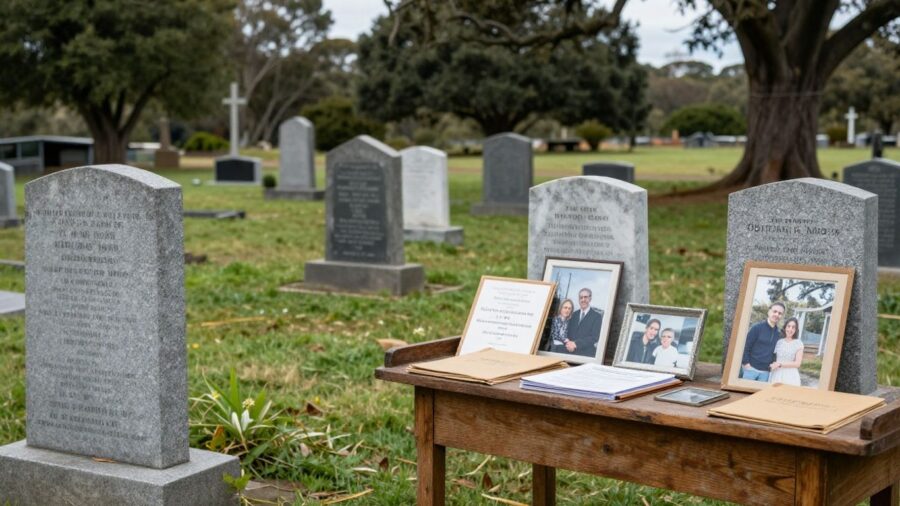
Before cleaning, we should photograph every face, edge, joint and surrounding feature. Wide images show the memorial in its setting, while close images capture lettering, cracks, stains, biological growth and areas where the surface is flaking. A simple written condition note can add context that photographs miss, such as movement under light pressure or water collecting at the base.

We should date the images and keep the original files unchanged. A scale, colour reference or familiar object placed nearby can help us understand size and colour later, provided it does not touch or obscure the memorial. Document first, intervene second is a useful rule when the condition is uncertain.

Evaluate environmental and site-related risks

We should look beyond the stone itself. Poor drainage, saturated soil, tree roots, sprinklers, falling branches, salt exposure and repeated frost can all contribute to deterioration. Shade and moisture may encourage lichen or algae, while direct sun can fade adjacent photographs, flowers or painted details.

The surrounding ground also deserves attention. We can note whether the memorial is sinking, whether water runs towards it and whether mowing equipment or visitors might strike it. These observations help us address causes rather than repeatedly treating symptoms.

Decide when professional conservation is necessary

A conservator or suitably experienced specialist should assess a memorial that is cracked, unstable, crumbling, extensively flaking or historically significant. We should also pause when lettering is lifting, pieces are missing, a statue is damaged or a previous repair is failing. Cleaning should not proceed merely because a surface looks dirty.

We can prepare useful information for a specialist by supplying photographs, measurements, ownership details and a short condition history. That makes the discussion more efficient and reduces the temptation to try an irreversible repair while waiting for help.

Create a safe cleaning and maintenance plan

Cleaning is not automatically preservation. Some surface deposits can be removed safely, while others are masking fragile material or protecting a weakened surface from further loss. We should plan around the memorial’s material and condition, use the gentlest reasonable method and stop when the surface responds poorly. Cemetery rules should be checked before any work begins.

Choose methods based on stone type and condition

We should start with a visual inspection and a small, inconspicuous test area where permission allows. Clean water and a soft natural or synthetic brush may be suitable for some sound surfaces, but no method should be treated as universal. Porous stone, painted lettering, attached photographs and friable surfaces require particular restraint.

Working from the bottom upwards can help prevent dirty runoff from marking a dry surface, while repeated gentle rinsing is generally preferable to forceful scrubbing. We should keep tools clean and avoid allowing loosened deposits to dry back onto the memorial. If the test area changes colour, texture or detail, we should stop.

Understand which tools and products can cause damage

Household bleach, acidic cleaners, abrasive powders, strong solvents and untested detergents can alter stone or metal and may damage old finishes. Wire brushes, metal scrapers, stiff abrasive pads and power tools can remove original surface material along with the deposit. Pressure washing can force water into cracks and weaken joints or lettering.

A short list of exclusions helps us avoid hurried decisions in the cemetery:

  • Do not use abrasive tools to make lettering appear sharper.
  • Do not apply household chemicals without specialist approval.
  • Do not pry off lichen or growth that is attached to the surface.
  • Do not test a new product over the whole memorial.

These precautions are not excessive. Once an inscription edge or weathered surface has been removed, cleaning cannot restore it.

Clean biological growth without eroding the surface

Algae, moss and lichen should be assessed rather than attacked. We can gently remove loose material by hand only where it releases easily, then use a suitable low-impact method recommended for the specific material. A soft brush, modest water flow and patience are safer starting points than scraping or force.

We should protect nearby ground and plants from runoff and rinse carefully so loosened material is not left on the face. If growth is deeply attached or the surface beneath is powdery, we should leave it for a conservation professional. A cleaner-looking memorial is not a successful result if its original surface has been lost.

Establish an appropriate maintenance schedule

A maintenance plan should match the site’s exposure and the memorial’s condition. We can inspect more often where irrigation, tree cover, flooding or heavy visitor traffic creates recurring problems, while a stable and sheltered memorial may need less frequent attention. Routine observation is usually safer than repeated intensive cleaning.

We should record each visit, including weather, visible changes, work completed and anything that needs referral. After a few inspections, a pattern may emerge. That record lets us adjust the schedule without guessing or treating the memorial more often than necessary.

Address common forms of deterioration

Deterioration rarely has one cause. Water, movement, salts, pollution, plants, poor repairs and ordinary weathering may act together over many years. We should describe what we see before choosing a remedy, since the same visual symptom can have different causes. The aim is to slow loss while retaining as much original material as possible.

Manage cracks, flaking, staining, and surface loss

Fine cracks, open joints, delamination, flaking and powdering should be photographed and monitored rather than filled immediately. Stains may come from rust, soil, biological growth, water movement or nearby metal, and an aggressive treatment can make them worse. We should never use a patch or coating simply to make a damaged area look uniform.

A condition log can compare the same details over time. If a crack grows, a flake lifts or lettering becomes less secure, we should restrict handling and seek specialist advice. Loose fragments should be retained safely and labelled, not discarded as rubble.

Improve drainage and control surrounding vegetation

Water management is often more useful than cosmetic work. We can observe where rainwater flows, whether the base remains wet and whether plants are touching or rooted beneath the memorial. Vegetation should be managed carefully, since pulling a large root or cutting into soil near a buried base may cause movement.

We should coordinate any ground work with the cemetery and avoid digging, grading or applying chemicals without permission. Trimming nearby growth, redirecting an obvious source of runoff and keeping mowing equipment away from the stone may reduce risk. These small measures can protect both the memorial and the wider burial ground.

Stabilize displaced or leaning memorial elements

A leaning tablet, loose base or displaced kerb may be unsafe as well as historically significant. We should not push it upright, wedge it with found materials or attempt to reset it without understanding its construction. Movement can break hidden joints or place pressure on lettering and carved details.

The safest immediate step is usually to keep people and equipment clear, photograph the condition and notify the responsible authority. A specialist can determine whether the element should be lifted, reset, pinned or left in place. Stabilisation should preserve evidence of the original arrangement wherever possible.

Recognize damage that requires specialized treatment

Specialist treatment is warranted when a memorial has structural movement, extensive biological attachment, failing mortar, severe salt damage, painted decoration or fragile carved work. Historic cemetery landscapes may also contain archaeological or cultural information that ordinary maintenance could disturb. We should resist advice based only on how a modern marker behaves.

When damage is uncertain, the least destructive action is usually to pause, document the condition and ask who is qualified to assess it.

That pause protects the memorial while we gather permission and technical guidance. It also gives us time to explain the problem accurately rather than commissioning a quick repair that conceals evidence or creates a new failure.

Preserve inscriptions, photographs, and physical records

A memorial can deteriorate physically while its history survives in photographs, transcriptions and family papers. We should preserve both kinds of evidence. Records are most useful when they retain the original detail, identify the source and explain when and how they were made. They should supplement the memorial, not replace careful care of the site.

Capture inscriptions with high-quality photography

We should photograph inscriptions in even light, taking both a complete view and close images of each section. Side lighting can reveal shallow lettering, but strong glare may hide it, so we should try different times of day and angles. A tripod or stable support can improve clarity without touching the memorial.

We should include the cemetery, section or plot reference where permitted, plus the date and photographer’s name. Several exposures are better than relying on one perfect image. We should also photograph decorative motifs, maker’s marks and adjacent memorials when they help explain relationships.

Use approved techniques for difficult-to-read lettering

When lettering is faint, we can try changing the angle of light, lightly wetting a sound surface if permitted, or making a careful digital adjustment to a copy of the image. We should not apply chalk, flour, shaving cream, paint, foil, adhesive or other substances to bring out letters. Rubbing can abrade fragile stone and should not be assumed safe.

If the inscription remains uncertain, we should mark a transcription with brackets or question marks rather than silently filling gaps. A second reader, local historian or specialist may recognise a name or abbreviation, but the original image should remain alongside every interpretation.

Organize photographs, transcriptions, and historical notes

We should use consistent file names that include the memorial name, location, date and view. A simple folder structure can separate original images, working copies, transcriptions, correspondence and published material. We should keep a backup in a different location and avoid editing the only original file.

A useful catalogue might include:

  • The full name and any alternative spelling.
  • Cemetery, plot or memorial location details.
  • Image dates, photographers and file references.
  • Transcription notes, uncertainties and source information.

This structure allows relatives, researchers and future caretakers to understand what we recorded. It also reduces the chance that a valuable image becomes detached from the person or place it documents.

Store paper records and memorabilia in stable conditions

Letters, service papers, funeral cards and old photographs should be kept cool, dry and away from direct sunlight. We should use clean hands, archival-quality folders or sleeves where available, and avoid pressure-sensitive tape, rubber bands and acidic newspaper wrapping. Different materials may need separate enclosures if one is likely to stain or transfer residue to another.

Digital copies are useful, but they do not remove the need to care for originals. We should label copies clearly, record ownership or permission where relevant and review storage conditions after leaks, moves or major changes in the home.

Follow legal, ethical, and cemetery requirements

Memorial work takes place in a shared and often sensitive setting. Ownership, cemetery authority, family wishes, cultural practice and heritage considerations may all affect what we can do. We should treat permission as part of preservation, not as paperwork to complete afterwards. The correct process varies by cemetery and location.

Research ownership and permission requirements

Before cleaning, photographing for publication, moving objects or arranging repairs, we should identify who manages the cemetery and who has authority over the memorial. A family connection may not by itself authorise work on a site managed by a council, religious body, trust or private owner. We should ask for requirements in writing when the proposed work is significant.

We should keep copies of approvals, names of contacts and any limits placed on the work. If permission is refused or unclear, we should not proceed on the assumption that good intentions settle the matter.

Coordinate with cemetery administrators and historical groups

Cemetery administrators can explain access, safety, decoration, vegetation and contractor rules. Local historical societies, regimental associations, museums and community groups may hold photographs or records that clarify a memorial’s history. Their knowledge can prevent us from treating an alteration as original or overlooking an important relationship between graves.

We should share our condition notes and proposed method before work begins, especially for older or distinctive memorials. Coordination also helps align separate volunteers so that one person’s cleaning does not undo another person’s documentation.

Respect cultural practices and burial-site sensitivity

We should approach every burial ground with humility. Memorial forms, inscriptions, objects and cemetery layouts may carry religious, cultural, military or community meaning that is not obvious to us. We should avoid moving offerings, opening containers, entering restricted areas or photographing sensitive features without appropriate consent.

We should also consider how our activity affects other visitors. Quiet working practices, clear walkways and discreet equipment show respect for people who are visiting to mourn, remember or worship. Preservation is not only about material survival; it includes the dignity of the place.

Avoid unauthorized repairs, cleaning, or relocation

Unauthorised work can damage a memorial, breach cemetery rules or erase evidence of its history. We should not reset, repaint, re-letter, glue, seal or relocate an element because it appears untidy or unsafe. If an immediate hazard exists, we can keep people away and report it rather than improvising a repair.

A written proposal should describe the condition, intended method, materials, timeframe and responsible person. That creates a clear opportunity for questions before anything irreversible happens.

Document restoration and conservation work

Good records make later care safer. They show what was original, what was added and how the memorial responded to treatment. We should document modest maintenance as well as major conservation, using plain language that another caretaker can understand. A record is most valuable when it is made during the work, not reconstructed years later.

Record materials, methods, and treatment dates

For each intervention, we should record the date, weather, people involved, condition before work, materials used and steps taken. Product labels, technical data and batch information should be kept where available. We should note areas that were deliberately left untreated and explain why.

A brief method statement can prevent confusion between cleaning, stabilisation, repair and reconstruction. It also helps a future specialist avoid introducing an incompatible material or repeating a treatment that caused an unwanted change.

Maintain before-and-after images

Before-and-after photographs should use similar viewpoints, lighting and scale where possible. We should retain the full set, including images of areas that were not treated and details that show small changes. Edited images may be useful for reports, but the unedited originals should remain available.

We should avoid presenting a cleaner surface as proof of success without checking for lost detail, changed colour, new cracking or disturbed ground. Images are evidence, not decoration, and their value depends on honest comparison.

Track contractors, specialists, and product information

We should record the names and contact details of contractors, conservators, cemetery staff and advisers. Their qualifications, recommendations and invoices can help establish what was done and who should be contacted if a repair fails. We should retain product names, manufacturers, instructions and disposal information rather than relying on memory.

Where advice was uncertain or opinions differed, we should note that too. Future caretakers can then understand the decision-making process instead of mistaking an old compromise for a proven method.

Create a central preservation file for future caretakers

A central file might contain ownership and permission records, maps, condition surveys, photographs, transcriptions, treatment reports and maintenance notes. We should keep a physical copy where appropriate and a backed-up digital copy with clear access arrangements. The location of the file should be known to more than one responsible person.

We can review the file after each significant visit and remove ambiguity from filenames and notes. A well-organised archive turns individual memories into a usable continuity of care.

Build a long-term memorial preservation program

Preservation becomes more manageable when it is shared and planned. Families, museums, regimental groups, cemeteries and local communities may each hold part of the knowledge or capacity needed. We should begin with achievable priorities rather than promising to repair everything at once. A written programme can then guide visits, fundraising and referrals.

Set priorities for urgent and valuable memorials

We should rank memorials by immediate safety risk, rate of deterioration, historical or family significance and the availability of records. A leaning structure may need urgent attention even if its inscription is recent, while a stable but rare memorial may justify careful documentation before any intervention. Priorities should be reviewed as conditions change.

A simple register can identify the next action, responsible person and review date. This keeps urgent work visible without allowing less dramatic but valuable memorials to disappear from consideration.

Estimate costs and plan for future funding

We should separate inspection, documentation, routine maintenance, specialist assessment and major conservation in our planning. Written estimates from qualified providers are more useful than a single broad figure, particularly where the scope may change after assessment. We should explain that general information about costs is not a personal financial recommendation and that funding decisions belong to the responsible family or organisation.

Possible support may come from family contributions, community events, historical organisations or cemetery programmes, subject to their rules. Keeping clear records of donations and spending helps maintain trust and shows how funds supported the memorial’s care.

Schedule inspections after severe weather

Storms, flooding, hail, strong winds and extended wet periods can expose weaknesses that were not obvious before. After severe weather, we should look for fresh movement, fallen branches, washout, new staining, open joints and damage to photographs or surrounding features. We should photograph changes before moving debris, unless immediate safety requires action.

A post-weather inspection does not need to become an unplanned restoration project. Its purpose is to identify hazards, record change and notify the right authority promptly.

Share preservation responsibilities with family and community stewards

One person should not be the only keeper of a memorial’s history. We can assign practical roles such as photography, record management, cemetery liaison, family research and inspection, while keeping final permissions clear. Training and written instructions make the programme more resilient when volunteers move away or circumstances change.

We should share findings respectfully with relatives, museums and community groups, with appropriate limits on personal information. Over time, cooperation can protect the physical memorial and preserve the stories attached to it.

Conclusion

When we assess carefully, clean gently, document every decision and respect cemetery authority, we give memorials a better chance of surviving with their meaning intact. The work is rarely about making old stone look new; it is about retaining material, inscriptions, records and context for the people who will care for them next.
Memorial preservation guide: How to protect gravestones, records, and family history

Assess the memorial and its preservation needs

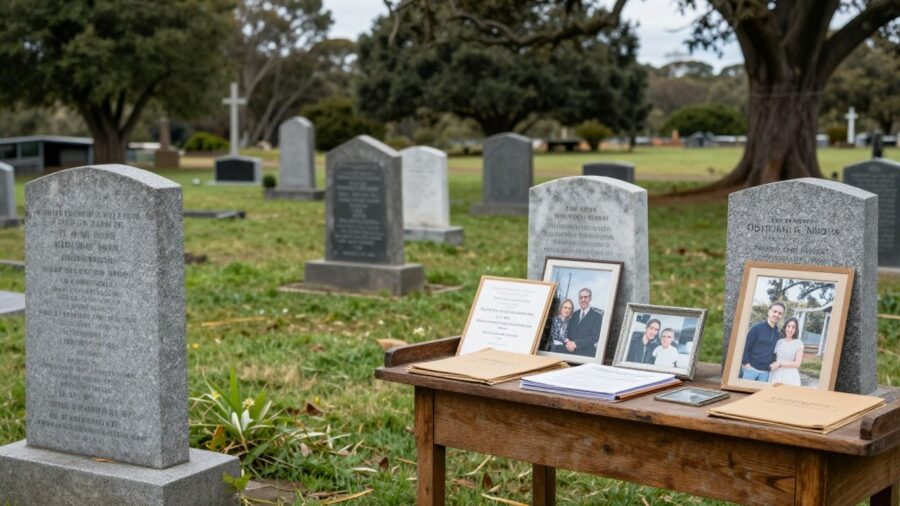
We should begin with observation, not intervention. A memorial is both a physical object and a record of family history, so its materials, setting and condition all matter. Our first visit should establish what is present, what has changed and what must not be disturbed. This memorial preservation guide takes a cautious approach because well-intended work can cause lasting damage.

Identify the memorial’s materials and construction

We can often identify granite, marble, sandstone, slate, concrete, ceramic or metal by looking at colour, grain, texture and the way the lettering was made. The construction may include a single slab, a base and tablet, a cross, a statue, kerbs or separate plaques. Older memorials may have repairs or additions that behave differently from the original material.

We should record the stone type where it is known, along with dimensions, fixings and any decorative elements. If we are unsure, we should describe what we can see rather than guess. The distinction matters because a sound granite marker and a friable sandstone tablet do not tolerate the same handling.

Document existing damage before taking action

Before cleaning, we should photograph every face, edge, joint and surrounding feature. Wide images show the memorial in its setting, while close images capture lettering, cracks, stains, biological growth and areas where the surface is flaking. A simple written condition note can add context that photographs miss, such as movement under light pressure or water collecting at the base.

We should date the images and keep the original files unchanged. A scale, colour reference or familiar object placed nearby can help us understand size and colour later, provided it does not touch or obscure the memorial. Document first, intervene second is a useful rule when the condition is uncertain.

Evaluate environmental and site-related risks

We should look beyond the stone itself. Poor drainage, saturated soil, tree roots, sprinklers, falling branches, salt exposure and repeated frost can all contribute to deterioration. Shade and moisture may encourage lichen or algae, while direct sun can fade adjacent photographs, flowers or painted details.

The surrounding ground also deserves attention. We can note whether the memorial is sinking, whether water runs towards it and whether mowing equipment or visitors might strike it. These observations help us address causes rather than repeatedly treating symptoms.

Decide when professional conservation is necessary

A conservator or suitably experienced specialist should assess a memorial that is cracked, unstable, crumbling, extensively flaking or historically significant. We should also pause when lettering is lifting, pieces are missing, a statue is damaged or a previous repair is failing. Cleaning should not proceed merely because a surface looks dirty.

We can prepare useful information for a specialist by supplying photographs, measurements, ownership details and a short condition history. That makes the discussion more efficient and reduces the temptation to try an irreversible repair while waiting for help.

Create a safe cleaning and maintenance plan

Cleaning is not automatically preservation. Some surface deposits can be removed safely, while others are masking fragile material or protecting a weakened surface from further loss. We should plan around the memorial’s material and condition, use the gentlest reasonable method and stop when the surface responds poorly. Cemetery rules should be checked before any work begins.

Choose methods based on stone type and condition

We should start with a visual inspection and a small, inconspicuous test area where permission allows. Clean water and a soft natural or synthetic brush may be suitable for some sound surfaces, but no method should be treated as universal. Porous stone, painted lettering, attached photographs and friable surfaces require particular restraint.

Working from the bottom upwards can help prevent dirty runoff from marking a dry surface, while repeated gentle rinsing is generally preferable to forceful scrubbing. We should keep tools clean and avoid allowing loosened deposits to dry back onto the memorial. If the test area changes colour, texture or detail, we should stop.

Understand which tools and products can cause damage

Household bleach, acidic cleaners, abrasive powders, strong solvents and untested detergents can alter stone or metal and may damage old finishes. Wire brushes, metal scrapers, stiff abrasive pads and power tools can remove original surface material along with the deposit. Pressure washing can force water into cracks and weaken joints or lettering.

A short list of exclusions helps us avoid hurried decisions in the cemetery:

  • Do not use abrasive tools to make lettering appear sharper.
  • Do not apply household chemicals without specialist approval.
  • Do not pry off lichen or growth that is attached to the surface.
  • Do not test a new product over the whole memorial.

These precautions are not excessive. Once an inscription edge or weathered surface has been removed, cleaning cannot restore it.

Clean biological growth without eroding the surface

Algae, moss and lichen should be assessed rather than attacked. We can gently remove loose material by hand only where it releases easily, then use a suitable low-impact method recommended for the specific material. A soft brush, modest water flow and patience are safer starting points than scraping or force.

We should protect nearby ground and plants from runoff and rinse carefully so loosened material is not left on the face. If growth is deeply attached or the surface beneath is powdery, we should leave it for a conservation professional. A cleaner-looking memorial is not a successful result if its original surface has been lost.

Establish an appropriate maintenance schedule

A maintenance plan should match the site’s exposure and the memorial’s condition. We can inspect more often where irrigation, tree cover, flooding or heavy visitor traffic creates recurring problems, while a stable and sheltered memorial may need less frequent attention. Routine observation is usually safer than repeated intensive cleaning.

We should record each visit, including weather, visible changes, work completed and anything that needs referral. After a few inspections, a pattern may emerge. That record lets us adjust the schedule without guessing or treating the memorial more often than necessary.

Address common forms of deterioration

Deterioration rarely has one cause. Water, movement, salts, pollution, plants, poor repairs and ordinary weathering may act together over many years. We should describe what we see before choosing a remedy, since the same visual symptom can have different causes. The aim is to slow loss while retaining as much original material as possible.

Manage cracks, flaking, staining, and surface loss

Fine cracks, open joints, delamination, flaking and powdering should be photographed and monitored rather than filled immediately. Stains may come from rust, soil, biological growth, water movement or nearby metal, and an aggressive treatment can make them worse. We should never use a patch or coating simply to make a damaged area look uniform.

A condition log can compare the same details over time. If a crack grows, a flake lifts or lettering becomes less secure, we should restrict handling and seek specialist advice. Loose fragments should be retained safely and labelled, not discarded as rubble.

Improve drainage and control surrounding vegetation

Water management is often more useful than cosmetic work. We can observe where rainwater flows, whether the base remains wet and whether plants are touching or rooted beneath the memorial. Vegetation should be managed carefully, since pulling a large root or cutting into soil near a buried base may cause movement.

We should coordinate any ground work with the cemetery and avoid digging, grading or applying chemicals without permission. Trimming nearby growth, redirecting an obvious source of runoff and keeping mowing equipment away from the stone may reduce risk. These small measures can protect both the memorial and the wider burial ground.

Stabilize displaced or leaning memorial elements

A leaning tablet, loose base or displaced kerb may be unsafe as well as historically significant. We should not push it upright, wedge it with found materials or attempt to reset it without understanding its construction. Movement can break hidden joints or place pressure on lettering and carved details.

The safest immediate step is usually to keep people and equipment clear, photograph the condition and notify the responsible authority. A specialist can determine whether the element should be lifted, reset, pinned or left in place. Stabilisation should preserve evidence of the original arrangement wherever possible.

Recognize damage that requires specialized treatment

Specialist treatment is warranted when a memorial has structural movement, extensive biological attachment, failing mortar, severe salt damage, painted decoration or fragile carved work. Historic cemetery landscapes may also contain archaeological or cultural information that ordinary maintenance could disturb. We should resist advice based only on how a modern marker behaves.

When damage is uncertain, the least destructive action is usually to pause, document the condition and ask who is qualified to assess it.

That pause protects the memorial while we gather permission and technical guidance. It also gives us time to explain the problem accurately rather than commissioning a quick repair that conceals evidence or creates a new failure.

Preserve inscriptions, photographs, and physical records

A memorial can deteriorate physically while its history survives in photographs, transcriptions and family papers. We should preserve both kinds of evidence. Records are most useful when they retain the original detail, identify the source and explain when and how they were made. They should supplement the memorial, not replace careful care of the site.

Capture inscriptions with high-quality photography

We should photograph inscriptions in even light, taking both a complete view and close images of each section. Side lighting can reveal shallow lettering, but strong glare may hide it, so we should try different times of day and angles. A tripod or stable support can improve clarity without touching the memorial.

We should include the cemetery, section or plot reference where permitted, plus the date and photographer’s name. Several exposures are better than relying on one perfect image. We should also photograph decorative motifs, maker’s marks and adjacent memorials when they help explain relationships.

Use approved techniques for difficult-to-read lettering

When lettering is faint, we can try changing the angle of light, lightly wetting a sound surface if permitted, or making a careful digital adjustment to a copy of the image. We should not apply chalk, flour, shaving cream, paint, foil, adhesive or other substances to bring out letters. Rubbing can abrade fragile stone and should not be assumed safe.

If the inscription remains uncertain, we should mark a transcription with brackets or question marks rather than silently filling gaps. A second reader, local historian or specialist may recognise a name or abbreviation, but the original image should remain alongside every interpretation.

Organize photographs, transcriptions, and historical notes

We should use consistent file names that include the memorial name, location, date and view. A simple folder structure can separate original images, working copies, transcriptions, correspondence and published material. We should keep a backup in a different location and avoid editing the only original file.

A useful catalogue might include:

  • The full name and any alternative spelling.
  • Cemetery, plot or memorial location details.
  • Image dates, photographers and file references.
  • Transcription notes, uncertainties and source information.

This structure allows relatives, researchers and future caretakers to understand what we recorded. It also reduces the chance that a valuable image becomes detached from the person or place it documents.

Store paper records and memorabilia in stable conditions

Letters, service papers, funeral cards and old photographs should be kept cool, dry and away from direct sunlight. We should use clean hands, archival-quality folders or sleeves where available, and avoid pressure-sensitive tape, rubber bands and acidic newspaper wrapping. Different materials may need separate enclosures if one is likely to stain or transfer residue to another.

Digital copies are useful, but they do not remove the need to care for originals. We should label copies clearly, record ownership or permission where relevant and review storage conditions after leaks, moves or major changes in the home.

Follow legal, ethical, and cemetery requirements

Memorial work takes place in a shared and often sensitive setting. Ownership, cemetery authority, family wishes, cultural practice and heritage considerations may all affect what we can do. We should treat permission as part of preservation, not as paperwork to complete afterwards. The correct process varies by cemetery and location.

Research ownership and permission requirements

Before cleaning, photographing for publication, moving objects or arranging repairs, we should identify who manages the cemetery and who has authority over the memorial. A family connection may not by itself authorise work on a site managed by a council, religious body, trust or private owner. We should ask for requirements in writing when the proposed work is significant.

We should keep copies of approvals, names of contacts and any limits placed on the work. If permission is refused or unclear, we should not proceed on the assumption that good intentions settle the matter.

Coordinate with cemetery administrators and historical groups

Cemetery administrators can explain access, safety, decoration, vegetation and contractor rules. Local historical societies, regimental associations, museums and community groups may hold photographs or records that clarify a memorial’s history. Their knowledge can prevent us from treating an alteration as original or overlooking an important relationship between graves.

We should share our condition notes and proposed method before work begins, especially for older or distinctive memorials. Coordination also helps align separate volunteers so that one person’s cleaning does not undo another person’s documentation.

Respect cultural practices and burial-site sensitivity

We should approach every burial ground with humility. Memorial forms, inscriptions, objects and cemetery layouts may carry religious, cultural, military or community meaning that is not obvious to us. We should avoid moving offerings, opening containers, entering restricted areas or photographing sensitive features without appropriate consent.

We should also consider how our activity affects other visitors. Quiet working practices, clear walkways and discreet equipment show respect for people who are visiting to mourn, remember or worship. Preservation is not only about material survival; it includes the dignity of the place.

Avoid unauthorized repairs, cleaning, or relocation

Unauthorised work can damage a memorial, breach cemetery rules or erase evidence of its history. We should not reset, repaint, re-letter, glue, seal or relocate an element because it appears untidy or unsafe. If an immediate hazard exists, we can keep people away and report it rather than improvising a repair.

A written proposal should describe the condition, intended method, materials, timeframe and responsible person. That creates a clear opportunity for questions before anything irreversible happens.

Document restoration and conservation work

Good records make later care safer. They show what was original, what was added and how the memorial responded to treatment. We should document modest maintenance as well as major conservation, using plain language that another caretaker can understand. A record is most valuable when it is made during the work, not reconstructed years later.

Record materials, methods, and treatment dates

For each intervention, we should record the date, weather, people involved, condition before work, materials used and steps taken. Product labels, technical data and batch information should be kept where available. We should note areas that were deliberately left untreated and explain why.

A brief method statement can prevent confusion between cleaning, stabilisation, repair and reconstruction. It also helps a future specialist avoid introducing an incompatible material or repeating a treatment that caused an unwanted change.

Maintain before-and-after images

Before-and-after photographs should use similar viewpoints, lighting and scale where possible. We should retain the full set, including images of areas that were not treated and details that show small changes. Edited images may be useful for reports, but the unedited originals should remain available.

We should avoid presenting a cleaner surface as proof of success without checking for lost detail, changed colour, new cracking or disturbed ground. Images are evidence, not decoration, and their value depends on honest comparison.

Track contractors, specialists, and product information

We should record the names and contact details of contractors, conservators, cemetery staff and advisers. Their qualifications, recommendations and invoices can help establish what was done and who should be contacted if a repair fails. We should retain product names, manufacturers, instructions and disposal information rather than relying on memory.

Where advice was uncertain or opinions differed, we should note that too. Future caretakers can then understand the decision-making process instead of mistaking an old compromise for a proven method.

Create a central preservation file for future caretakers

A central file might contain ownership and permission records, maps, condition surveys, photographs, transcriptions, treatment reports and maintenance notes. We should keep a physical copy where appropriate and a backed-up digital copy with clear access arrangements. The location of the file should be known to more than one responsible person.

We can review the file after each significant visit and remove ambiguity from filenames and notes. A well-organised archive turns individual memories into a usable continuity of care.

Build a long-term memorial preservation program

Preservation becomes more manageable when it is shared and planned. Families, museums, regimental groups, cemeteries and local communities may each hold part of the knowledge or capacity needed. We should begin with achievable priorities rather than promising to repair everything at once. A written programme can then guide visits, fundraising and referrals.

Set priorities for urgent and valuable memorials

We should rank memorials by immediate safety risk, rate of deterioration, historical or family significance and the availability of records. A leaning structure may need urgent attention even if its inscription is recent, while a stable but rare memorial may justify careful documentation before any intervention. Priorities should be reviewed as conditions change.

A simple register can identify the next action, responsible person and review date. This keeps urgent work visible without allowing less dramatic but valuable memorials to disappear from consideration.

Estimate costs and plan for future funding

We should separate inspection, documentation, routine maintenance, specialist assessment and major conservation in our planning. Written estimates from qualified providers are more useful than a single broad figure, particularly where the scope may change after assessment. We should explain that general information about costs is not a personal financial recommendation and that funding decisions belong to the responsible family or organisation.

Possible support may come from family contributions, community events, historical organisations or cemetery programmes, subject to their rules. Keeping clear records of donations and spending helps maintain trust and shows how funds supported the memorial’s care.

Schedule inspections after severe weather

Storms, flooding, hail, strong winds and extended wet periods can expose weaknesses that were not obvious before. After severe weather, we should look for fresh movement, fallen branches, washout, new staining, open joints and damage to photographs or surrounding features. We should photograph changes before moving debris, unless immediate safety requires action.

A post-weather inspection does not need to become an unplanned restoration project. Its purpose is to identify hazards, record change and notify the right authority promptly.

Share preservation responsibilities with family and community stewards

One person should not be the only keeper of a memorial’s history. We can assign practical roles such as photography, record management, cemetery liaison, family research and inspection, while keeping final permissions clear. Training and written instructions make the programme more resilient when volunteers move away or circumstances change.

We should share findings respectfully with relatives, museums and community groups, with appropriate limits on personal information. Over time, cooperation can protect the physical memorial and preserve the stories attached to it.

Conclusion

When we assess carefully, clean gently, document every decision and respect cemetery authority, we give memorials a better chance of surviving with their meaning intact. The work is rarely about making old stone look new; it is about retaining material, inscriptions, records and context for the people who will care for them next.

Memorial preservation guide: How to protect, document, and care for lasting tributes

Understand the memorial’s materials and condition

Before we clean, move, or repair a memorial, we need to understand what it is made of and how it has changed over time. Stone, metal, timber, glass, and composite materials respond differently to moisture, salts, temperature shifts, and physical contact. A careful first inspection gives us a baseline and helps prevent well-meant work from causing further harm. This is the foundation of a practical memorial preservation guide.

Identify stone, metal, wood, and composite materials

We should begin by identifying the principal materials, rather than assuming every memorial is made from durable stone. Granite, marble, sandstone, slate, concrete, bronze, iron, timber, and mixed assemblies each have different weaknesses. Metal fixtures may corrode where they meet stone, while painted wood and composite panels can conceal swelling, delamination, or water damage.

Age and construction are useful clues, but they are not enough on their own. We can examine the colour, grain, tooling marks, joinery, surface finish, fasteners, and any surviving records. When the material remains uncertain, we should avoid testing it with chemicals or force until a conservator or suitably experienced specialist can advise us.

Document existing damage with photographs and notes

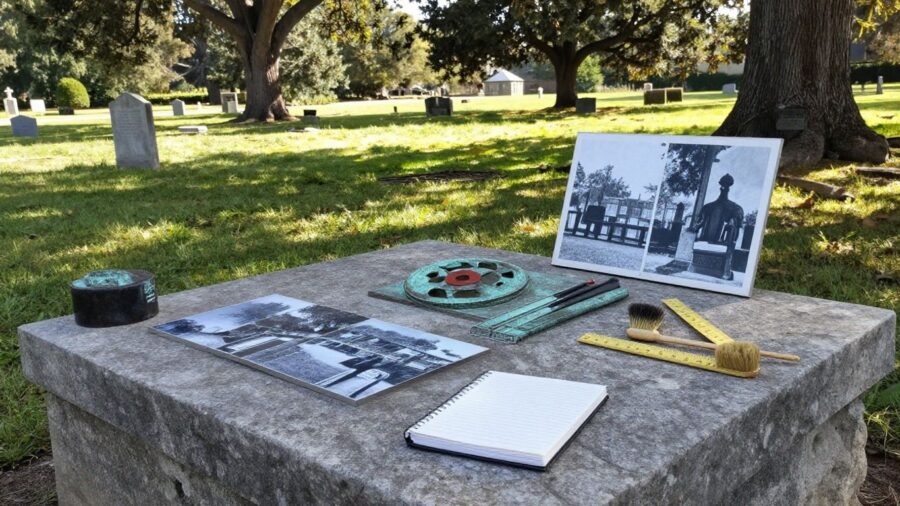
We should record the condition before any cleaning or repair begins. Take overview photographs that show the memorial in its setting, then capture closer images of inscriptions, joints, stains, cracks, biological growth, and detached components. A ruler or familiar object can help indicate scale, provided it does not touch or obscure a fragile surface.

Notes should include the date, weather, location, orientation, apparent material, and the condition of the ground around the memorial. A dated baseline matters because gradual change is difficult to recognise from memory. We can keep the record clear by separating what we can see from what we suspect has caused it.

A compact field record can include the following:

  • Memorial identification and precise location
  • Materials, finishes, fixtures, and visible alterations
  • Cracks, leaning, movement, flaking, or missing pieces
  • Plants, water flow, staining, and nearby maintenance risks

Afterwards, we should save the photographs with consistent file names and link them to the notes. That simple habit turns a one-off inspection into a useful record for caretakers, descendants, and future conservators.

Distinguish surface weathering from structural deterioration

Not every mark indicates an urgent failure. Fading, minor soiling, shallow surface wear, and some changes in colour may reflect age and exposure, whereas open cracks, bulging faces, powdering stone, loose lettering, and separated joints can indicate deeper deterioration. We should look for movement as well as appearance: a leaning slab or a fitting that shifts under its own weight needs more caution than a stable surface stain.

We should never scrape, tap hard, or handle a questionable feature merely to satisfy our curiosity. Comparing photographs over time can reveal whether a condition is stable or progressing. If uncertainty remains, the safest choice is to pause work and seek an assessment.

Recognize conditions that require professional assessment

Professional advice is warranted when a memorial is unstable, badly cracked, flaking, crumbling, heavily tilted, or carrying a detached stone element. It is also sensible where inscriptions are unusually fragile, historic significance is known or suspected, or earlier repairs have failed. Damage associated with roots, subsidence, vandalism, vehicle impact, or corroded fixings may extend beyond what a routine cleaning can address.

We should keep people away from an unsafe structure and notify the responsible caretaker or owner. Cleaning an unstable memorial can remove evidence, loosen material, or put someone at risk. A written assessment also gives us a reasoned basis for deciding whether to stabilise, repair, monitor, or leave the surface untouched.

Check permissions and preservation requirements

Memorials often sit within places governed by more than one set of expectations. A cemetery, churchyard, private property, war memorial reserve, or museum collection may have its own approval process. Before we lift, clean, repaint, reset, or photograph anything in detail, we should find out who has authority and what preservation principles apply.

Permission is not just bureaucracy. It can protect burial places, historic fabric, family wishes, and the integrity of a wider site. It also helps us avoid carrying out work that later has to be reversed.

Confirm cemetery, religious, and property regulations

We should contact the cemetery office, site manager, religious organisation, landholder, or relevant authority before starting. Ask whether cleaning, decoration, vegetation removal, photography, repairs, or access outside normal hours is restricted. Some places require approved contractors, written requests, insurance documentation, or a record of proposed treatments.

Where a memorial is on private land, permission from the owner may not be enough if the object forms part of a protected burial ground or historic site. We should keep copies of approvals and note the name and role of the person who provided them. Clear communication at the beginning is usually easier than explaining an unauthorised alteration later.

Review local rules for cleaning, repairs, and replacements

Local rules may distinguish between routine care and conservation work. Washing a stable modern marker may be treated differently from repointing an old structure, replacing a broken plaque, repainting lettering, or resetting a fallen headstone. We should ask whether proposed materials, contractors, methods, and photographs need approval.

The question of replacement deserves particular care. A new component can make a memorial safer, but it may also change its appearance or remove evidence of its history. We should describe the existing part, explain why action is needed, and retain the removed component where the responsible authority considers it significant.

Respect historic-designation and archaeological protections

A memorial within a heritage-listed precinct, registered cemetery, battlefield, museum collection, or archaeological area may be subject to additional controls. Ground disturbance can affect burials or deposits even when the visible memorial seems simple. Historic paint, lettering, tool marks, and repair traces may also be valuable evidence.

We should not strip finishes, deepen inscriptions, excavate around a base, or remove an old fitting simply because it looks untidy. Before work begins, we can check heritage registers, site records, local historical societies, and the advice of the managing authority. Preservation often means accepting an imperfect surface because it carries information that a cleaner one would lose.

Coordinate with caretakers, descendants, and preservation groups

A good plan includes the people who know the memorial’s history and practical setting. Caretakers may understand drainage, mowing patterns, access issues, and previous treatments. Descendants may hold photographs or stories that explain an alteration, while historical and preservation groups can help place the memorial within a wider community record.

We should agree on the scope of work, responsibilities, access arrangements, and how the results will be recorded. This is especially useful for regimental, civic, and museum-related memorials, where names and symbols may carry meaning beyond the object itself. Shared knowledge reduces the chance of treating an important feature as ordinary damage.

Build a safe cleaning plan

Cleaning should serve the memorial, not simply make it look new. Dirt, biological growth, and deposits can sometimes obscure an inscription or hold moisture against a surface, but cleaning can also remove fragile material. We should decide what needs doing, choose the least aggressive suitable method, and stop whenever the surface reacts unexpectedly.

A thoughtful plan covers the memorial, nearby ground, tools, water runoff, weather, and people working around it. It should also state what we will not attempt without specialist advice. Patience is often more protective than strength.

Decide when cleaning is appropriate and necessary

We should first ask what problem cleaning will solve. If the aim is to improve readability, remove harmful growth, or document a surface that is becoming obscured, limited cleaning may be justified. If the aim is only to make an old memorial appear uniform, leaving some age and patina may be the more respectful choice.

The surface must be stable enough to clean. We should postpone work during very hot, freezing, windy, or exceptionally wet conditions, and avoid cleaning when water could be trapped in cracks or porous material. A small, well-defined treatment is safer than trying to achieve a dramatic transformation in one session.

Choose water, brushes, and conservation-safe supplies

For many stable surfaces, clean water and soft, non-metallic brushes provide a cautious starting point. We should use clean water, rinse gradually, and select tools that will not scratch, gouge, or polish the material. Cloths, containers, and spray equipment should be clean so that we do not introduce grit or contaminants.

Any specialist cleaning product should be chosen for the known material and approved context, not because it is a familiar household product. We should follow the product instructions, protect surrounding surfaces, and arrange safe collection or drainage of runoff. If we cannot identify the material or predict the result, water alone—or no treatment—may be the responsible option.

Test a small area before treating the full surface

A discreet test area helps us see whether a method causes colour change, surface loss, streaking, or movement of a finish. We should photograph the test, record the tools and dilution used, and allow the area to dry before judging the result. A test is not a guarantee, but it can expose an unsuitable method before damage spreads across the whole memorial.

We should compare the treated patch with adjacent untreated material in good light. If the surface becomes rougher, softer, lighter, darker, or more powdery, we should stop. The plan can then be revised with professional guidance rather than expanded by guesswork.

Avoid pressure washing, harsh chemicals, and abrasive tools

High-pressure water and aggressive tools can scar stone, open joints, remove lettering, and drive moisture into weak areas. Acids, bleach, strong household cleaners, wire brushes, metal scrapers, and abrasive pads may create damage that is difficult or impossible to reverse. Even a method that appears effective at first can accelerate deterioration afterwards.

The safest treatment is usually the gentlest one that achieves a clearly defined conservation purpose.

We should treat that principle as a decision rule, not a promise that every memorial can be cleaned with the same kit. When gentle work does not achieve the desired result, the answer may be a specialist assessment rather than a stronger chemical or tool.

Manage biological growth and common staining

Algae, lichen, moss, leaves, rust, mineral deposits, and pollution can make a memorial difficult to read and can hold moisture against the surface. They can also be part of a long environmental history, so removal is not automatically beneficial. We need to consider the material, the depth of the deposit, the stability of the surface, and the source of the moisture.

The surrounding setting matters as much as the visible mark. Shade, poor drainage, leaking irrigation, overhanging branches, and soil against a base can all encourage recurring problems. Treating the cause is usually more useful than repeatedly treating the symptom.

Remove algae, lichen, moss, and plant growth carefully

We should never pull firmly on growth that is attached to a fragile surface or rooted in a joint. Instead, we can remove loose debris gently, keep tools away from lettering, and seek advice where growth has penetrated cracks or lifted a finish. Roots and stems around the base should be addressed without levering against the memorial.

Biological material may return if shade and dampness remain. We should record its location before removal and inspect the area afterwards for loosened fragments or exposed damage. A slower approach helps us distinguish superficial growth from growth that is holding a failing section together.

Address rust, mineral deposits, and environmental staining

Rust may come from a nearby fastener, fence, plaque, or buried component, while white mineral deposits can result from water movement through porous material. Runoff from soil, roofs, paths, or irrigation may leave streaks that look like surface dirt but have a continuing source. Identifying that source should come before selecting a treatment.

Stain removal can be risky because the deposit may be bonded to weakened material. We should not use acidic products, abrasive scraping, or improvised poultices without understanding the surface and the likely reaction. A conservator can help distinguish a removable deposit from a change that has entered the material itself.

Understand when stains should remain untreated

Some stains are evidence of age, weather, former repairs, or the memorial’s setting. Removing them may create a bright patch that is visually distracting and historically misleading. If a stain is stable, does not obscure important information, and is not causing active damage, leaving it alone may be the soundest decision.

We should be particularly cautious with coloured finishes, historic paint, patination, and darkened lettering. A memorial does not need to look newly installed to be cared for properly. Our notes should explain why a mark was retained, so a future caretaker does not mistake a deliberate conservation choice for neglect.

Prevent damage from nearby vegetation and irrigation

Plants should not press against a memorial, enter joints, or direct persistent moisture onto its face. Irrigation heads can saturate bases and splash soil onto inscriptions, while tree roots may disturb foundations or change drainage patterns. We should work with the site manager before pruning, relocating plants, or changing watering arrangements.

The aim is not to create a bare setting at all costs. We can preserve an appropriate landscape while keeping stems, roots, water, and mowing equipment away from vulnerable features. Regular observation after rain or irrigation often reveals problems that are invisible during dry weather.

Repair and restore without erasing history

Repair decisions should begin with the memorial’s significance and condition, not with a desire for visual perfection. Stabilisation may be urgent even when cosmetic work is unnecessary. Conversely, a striking surface repair may conceal evidence or introduce a material that fails more quickly than the original.

We should distinguish between retaining what survives, preventing further loss, and recreating something that is missing. Each aim calls for different evidence and a different level of intervention. The best result is often quiet, compatible, and easy to document.

Separate stabilization from cosmetic restoration

Stabilisation aims to make a memorial safer and slow active deterioration. It may involve securing a loose element, improving support, reducing water entry, or addressing a failing joint. Cosmetic restoration, by contrast, changes appearance and may include repainting, filling, polishing, or recreating details.

We should complete the minimum stabilising work needed before considering appearance. This order protects original material and gives us time to understand how the memorial behaves. A plain, stable memorial is generally preferable to a visually renewed one that has lost historic evidence.

Select compatible materials for cracks, joints, and fixtures

Repair materials should be compatible in strength, porosity, movement, colour, and moisture behaviour. A rigid or impervious repair can force water into adjacent material or cause new breaks as temperatures change. Metal fixtures also need attention to corrosion, galvanic reactions, drainage, and the way they are anchored.

We should keep samples, product information, and the reasoning behind the choice in the project record. Temporary supports and reversible methods may be appropriate while a fuller repair is being planned. Where a crack is active or a component bears weight, a qualified professional should specify the treatment.

Preserve original lettering, finishes, and design details

Inscriptions and decorative details carry identity, service history, family connections, and artistic information. We should not deepen worn letters, repaint uncertain traces, or replace a weathered finish simply to improve legibility. High-quality photography, measured drawings, and careful transcription can preserve information without altering the object.

Before touching lettering, we should compare it with historical images and consult people who understand the memorial’s context. Different eras used different lettering styles, symbols, and colour conventions. A small alteration can change the meaning of the whole design.

Know when replacement parts are justified

Replacement may be justified when a missing or failed part threatens safety, allows water entry, or prevents the memorial from functioning as intended. The decision should be supported by evidence such as matching fragments, historic photographs, maker information, or a clearly documented design. A replacement should be identifiable in the record rather than passed off as original.

We should consider whether repair, retention, or a discreet modern support can achieve the same purpose with less loss. The removed original, if it survives, should be labelled and stored or returned according to the owner’s instructions. That preserves both the memorial and the story of its alteration.

Create a documentation and digitization system

Documentation is more than a collection of attractive photographs. It links names, dates, symbols, locations, condition observations, permissions, treatments, and family knowledge. A consistent system makes the record useful to a museum, regiment, cemetery, local history group, or future caretaker.

We should choose a level of detail that we can maintain. A modest, orderly record is more valuable than an ambitious archive that becomes confusing or inaccessible. Digital files should support, rather than replace, the physical memorial and its custodial arrangements.

Record inscriptions, dates, symbols, and family connections

We should transcribe inscriptions exactly as they appear, preserving line breaks, punctuation, spelling, abbreviations, and uncertain characters. Record names, ranks, units, dates, makers’ marks, symbols, dedications, and relationships only when supported by the object or reliable source material. Uncertainty should be marked clearly rather than silently corrected.

Family papers, service records, museum catalogues, and oral histories can add context, but they should be identified as separate sources. We can note variant names or conflicting dates without forcing them into a single answer. This distinction keeps the memorial’s physical evidence visible while allowing the wider story to grow.

Capture consistent photographs from multiple angles

We should photograph the front, back, sides, top, base, surrounding setting, and any fittings that may matter later. Use consistent distance and lighting where possible, and take closer images of each inscription and damaged area. A scale reference can assist with condition work, while a colour reference may help in controlled documentation.

Photographs should show both the detail and its place in the whole memorial. We can create a repeatable sequence so seasonal inspections are easier to compare. The purpose is not simply to produce a polished image; it is to preserve evidence of position, texture, condition, and change.

Store scans, transcriptions, and location data securely

We should use clear file names, folders, and version dates, then keep at least one additional copy in a separate location. Scanned papers, transcriptions, maps, permission letters, treatment notes, and photographs should be linked by a shared memorial identifier. Location data should be precise enough for authorised caretakers to find the object without exposing unnecessary personal information.

A simple register can record who created each file, when it was created, and whether it is an original, edited copy, or transcription. We should review file formats and access arrangements periodically. Digital preservation is an ongoing care task, not a single upload.

Share records while protecting sensitive personal information

Public sharing can support remembrance, research, and community connections, but not every detail should be published. We should check permissions before posting modern family contact information, private correspondence, precise locations of vulnerable objects, or images of people who have not agreed to be shown. The public version can be selective while the full archive remains with an authorised custodian.

When sharing a record, we should describe its source, date, limitations, and any uncertainty. Corrections should be logged rather than silently replacing earlier material. This approach supports trust and gives descendants or researchers a clear route to contribute further information.

Establish long-term memorial care

A memorial needs an aftercare plan once the initial inspection, cleaning, or repair is complete. Weather, landscaping, visitors, maintenance equipment, and water movement continue to affect it. Regular observation allows us to address small changes before they become an expensive or irreversible intervention.

The plan should name the responsible person or organisation, set realistic inspection intervals, and explain what would trigger a new assessment. It should also account for access, records, permissions, and the possibility that custodians will change over time. Continuity is as valuable as any single treatment.

Set seasonal inspection and maintenance schedules

We should inspect at sensible intervals and after unusual events such as severe storms, flooding, nearby construction, vandalism, or major landscaping. Seasonal checks can look for new biological growth, movement, water marks, loose parts, surface loss, and changes in the surrounding ground. Photographs taken from the same positions make small changes easier to identify.

Routine care should be limited to approved tasks. We can record what was inspected, what was observed, what was done, and what remains unresolved. A schedule that is simple enough to follow is more useful than one that exists only on paper.

Monitor weather exposure, drainage, and surrounding landscaping

Sun, wind, frost, salt, rain, and temperature changes affect materials in different ways. We should observe where water collects, how it leaves the site, whether soil is splashing onto the base, and whether gutters or irrigation send water towards the memorial. Nearby roots and changing ground levels can also affect stability.

Small landscape adjustments may reduce repeated damage, but they should be approved by the relevant caretaker and designed to protect the site as a whole. We should avoid burying bases, creating hard contact with the memorial, or directing runoff into existing cracks. The setting is part of the conservation problem, not merely a backdrop.

Work with qualified conservators for complex projects

Complex work includes structural stabilisation, significant stone loss, historic paint, failed previous repairs, archaeological sensitivity, and the treatment of valuable metal or composite components. We should look for experience relevant to the material and type of memorial, ask how the work will be documented, and request a written scope before proceeding.

A qualified conservator should be willing to explain the proposed method, likely risks, alternatives, and limits of certainty. We can seek more than one professional view when the intervention is substantial. The aim is informed care, not the most dramatic restoration.

Maintain a written history of treatments and changes

Every intervention should leave a record of what changed and why. We should note dates, permissions, people involved, materials, methods, photographs, removed components, unexpected findings, and recommendations for the next inspection. Even a short entry can prevent future caretakers from repeating an unsuitable treatment.

The record should travel with the memorial’s institutional or family archive when responsibility changes. We can also keep a copy with a relevant cemetery, museum, regiment, local history group, or preservation body where appropriate. Over time, this treatment history becomes part of the memorial’s story and a practical guide to its future care.

Conclusion

A memorial preservation guide is most useful when it leads us towards careful decisions rather than automatic treatments. By identifying materials, documenting condition, checking permissions, using gentle methods, and recording every change, we can protect both the object and the history attached to it. Some memorials need active repair, while others need monitoring and restraint; in either case, respectful care begins with understanding what has survived.

Powered by WordPress & Theme by Anders Norén